Most platforms are built for a team and a budget you don’t have. Results or resources — something gets compromised. Graylog is built for the people covering security, IT, and audit: one platform, at a cost of ownership that makes sense. And AI that explains itself instead of asking to be trusted.
Recognized in the 2025 Gartner® Magic Quadrant™ for SIEM
Leader and Outperformer — GigaOm Radar for SIEM
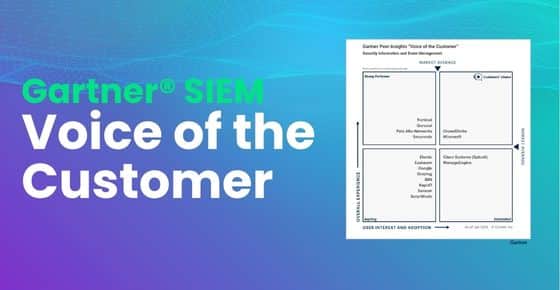
86% would recommend — Gartner® Peer Insights™ Voice of the Customer for SIEM, April 2026
Graylog started in 2009 as an open source log management project then evolved through user feedback to a full-featured SIEM on the same codebase. That order matters. The foundation handles volume, and everything added since sits on it. You feel it as speed.
installations
users
messages/second
total capacity/day
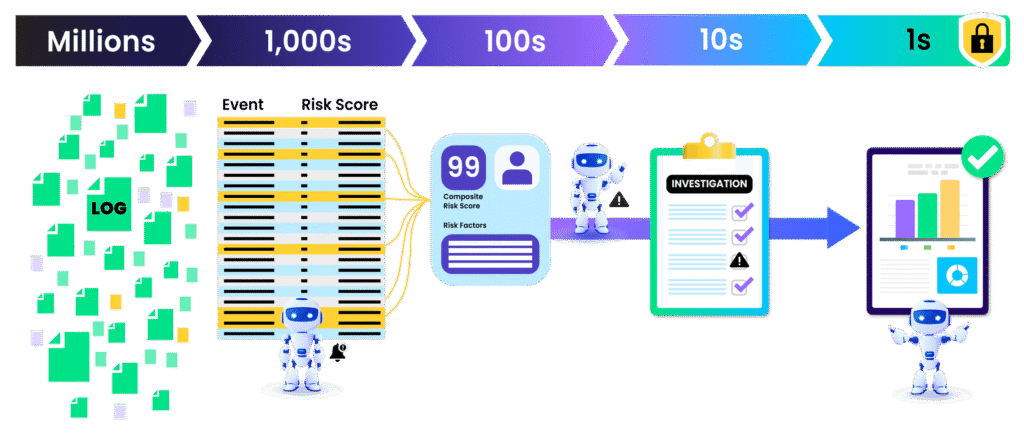
Risk scoring that goes past the alert
Alerts pointing at the same thing become a single incident, weighted by what that asset is worth to you and other risk amplifiers. What lands in front of you is a short list of verified incidents, not a long list of scored alerts.
Investigations that assemble themselves, reports that write themselves
You don’t build the case,you review it. Related events, timeline, and the steps taken are already gathered by the time it reaches you, so the work starts at the judgment call instead of hours of collection. That changes who can run an incident. Then let our report writing AI agent draft the documentation of what happened and what needs fixing.
Detections that arrive ready to use
Pre-built content for common sources, attack frameworks, and the standards you’re audited against, so you don’t spend the first week writing rules from scratch.

Enterprise log management, built for volume
When a service degrades, the evidence is scattered across a load balancer, a container that no longer exists, a managed cloud service, and whatever shipped in the last hour. Graylog collects all of it on one timeline with consistent field names, so you’re comparing systems instead of translating between them. The question stops being where to look and becomes what changed.
Fast enough to follow a hunch
Search across terabytes and the results are back before you’ve switched tabs. Slow search changes what you bother to ask; fast search means you keep asking.
Compliance mandates you can defend
Tiering and policy-driven retention that satisfy an audit without keeping everything in expensive storage to do it. Logs carry personal data too, so who can reach it and how long it stays are policies you set, not defaults you inherit.
I can’t afford to log everything, but I can’t afford to miss anything
So you drop data at the edge to keep the bill down, balancing against compliance requirements. Then an investigation root cause analysis goes looking for exactly the log that didn’t make the cut.
Powerful options, but I don’t have a specialist to run it
Legacy tools that take a full-time admin before they return a single answer. Every new log source or detection rule becomes a project; the expertise goes into running the platform instead of solving your organization’s problems.
The existing platform won’t bend
When the platform can’t bend or the budget won’t, you have to work around it. A second tool for whatever doesn’t fit, a fee to get data out (if it’s even possible), no control over where the data lives. That’s time and money spent on extra work, building and maintaining integrations, not fixing issues.
Every finding comes with the evidence that produced it, so you can check the reasoning instead of taking a verdict on faith. Runs on the AI tooling you already have, under your access controls.
Route what matters into analytics and park just-in-case-data in a lake that ships with the platform. Nothing gets thrown away to protect the budget, and nothing needs a second tool.
Alerts get grouped by the asset or identity behind them, then weighted by what that thing is worth and known active attack campaign patterns. A wall of alerts becomes a handful of verified incidents worth investigating.